Meeting of the Valdai International Discussion Club
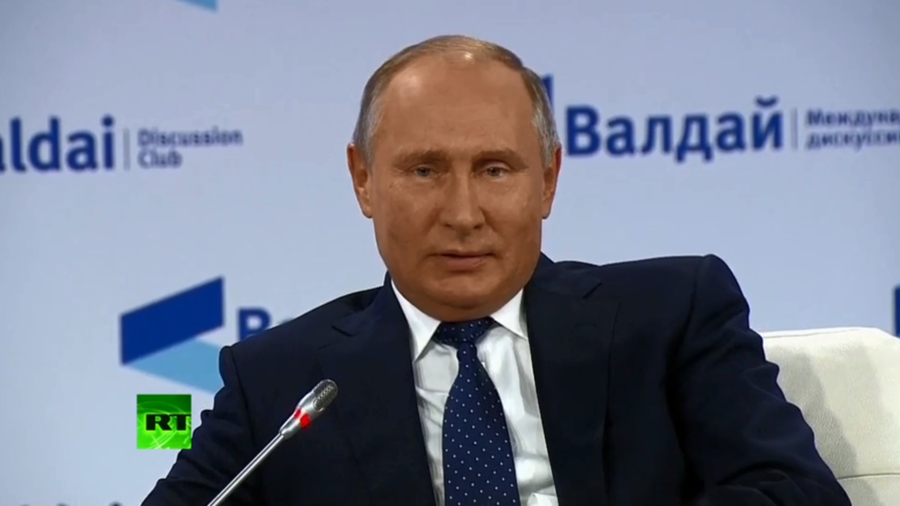
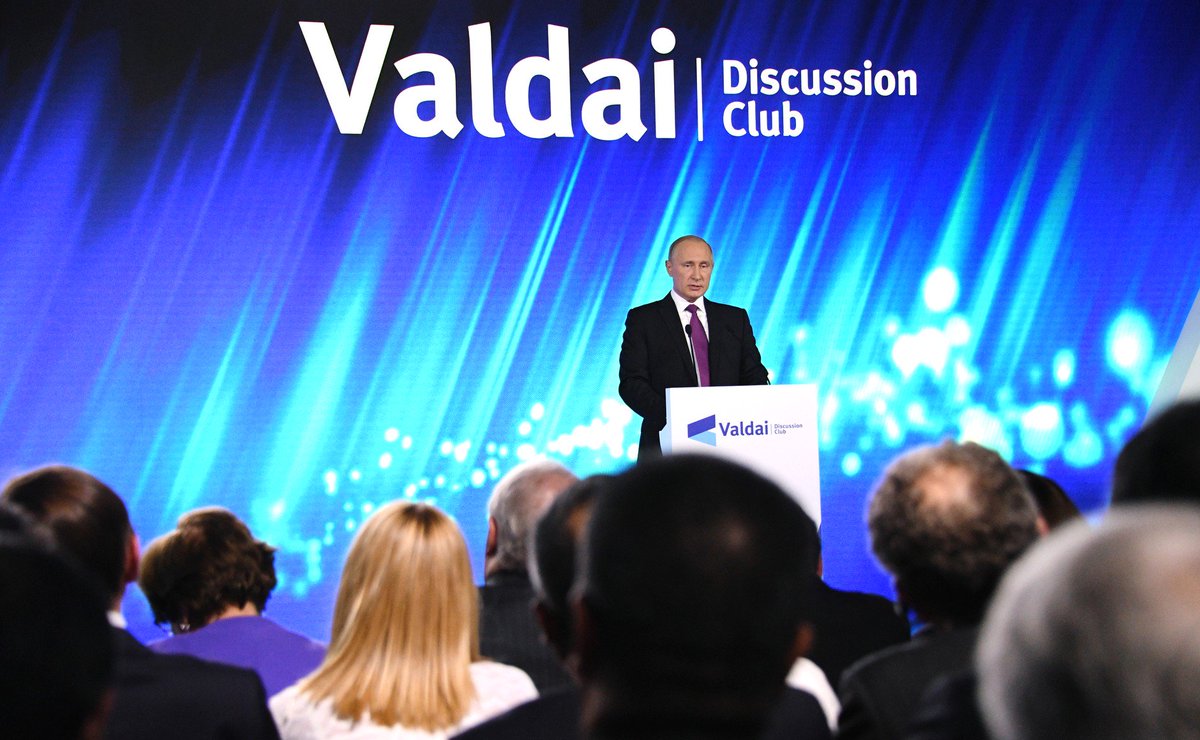
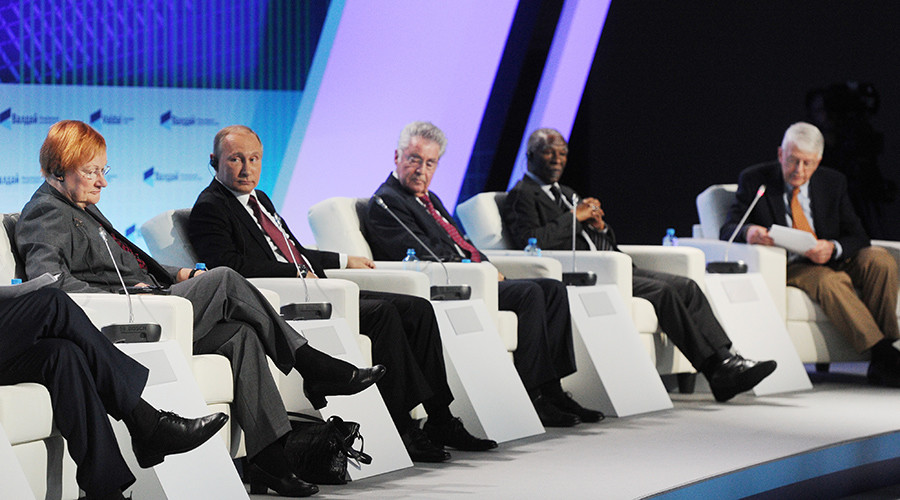
Vladimir Putin took part in the final plenary session of the 12th annual meeting of the Valdai International Discussion Club.
October 22, 2015
20:45
Sochi
Meeting of the Valdai International Discussion Club
This topic of this year’s Valdai conference is Societies Between War and Peace: Overcoming the Logic of Conflict in Tomorrow’s World. In the period between October 19 and 22, experts from 30 countries have been considering various aspects of the perception of war and peace both in the public consciousness and in international relations, religion and economic interaction between states.
* * *
President of Russia Vladimir Putin: Colleagues, ladies and gentlemen,
Allow me to greet you here at this regular meeting of the Valdai International Club.
It is true that for over 10 years now this has been a platform to discuss the most pressing issues and consider the directions and prospects for the development of Russia and the whole world. The participants change, of course, but overall, this discussion platform retains its core, so to speak – we have turned into a kind of mutually understanding environment.
We have an open discussion here; this is an open intellectual platform for an exchange of views, assessments and forecasts that are very important for us here in Russia. I would like to thank all the Russian and foreign politicians, experts, public figures and journalists taking part in the work of this club.
This year the discussion focusses on issues of war and peace. This topic has clearly been the concern of humanity throughout its history. Back in ancient times, in antiquity people argued about the nature, the causes of conflicts, about the fair and unfair use of force, of whether wars would always accompany the development of civilisation, broken only by ceasefires, or would the time come when arguments and conflicts are resolved without war.
I’m sure you recalled our great writer Leo Tolstoy here. In his great novel War and Peace, he wrote that war contradicted human reason and human nature, while peace in his opinion was good for people.
True, peace, a peaceful life have always been humanity’s ideal. State figures, philosophers and lawyers have often come up with models for a peaceful interaction between nations. Various coalitions and alliances declared that their goal was to ensure strong, ‘lasting’ peace as they used to say. However, the problem was that they often turned to war as a way to resolve the accumulated contradictions, while war itself served as a means for establishing new post-war hierarchies in the world.
Meanwhile peace, as a state of world politics, has never been stable and did not come of itself. Periods of peace in both European and world history were always been based on securing and maintaining the existing balance of forces. This happened in the 17thcentury in the times of the so-called Peace of Westphalia, which put an end to the Thirty Years’ War. Then in the 19th century, in the time of the Vienna Congress; and again 70 years ago in Yalta, when the victors over Nazism made the decision to set up the United Nations Organisation and lay down the principles of relations between states.