Labels

SUPPORT JULIAN ASSANGE

Friday, November 29, 2019

PT -- Manlio Dinucci -- As palavras embaraçosas do Papa Francisco, a partir de Hiroshima: «A bomba atómica é imoral e criminosa». Silêncio bipartidário sobre o Papa

Il papa in Giappone
As palavras embaraçosas do Papa Francisco, a partir de Hiroshima:
«A bomba atómica é imoral e criminosa».
Silêncio bipartidário sobre o Papa
Manlio Dinucci

Silêncio de tumba no arco institucional italiano, sempre loquaz sobre o Papa, sobre as palavras proferidas por Francisco, em 24 de Novembro, em Hiroshima e Nagasaki: “O uso da energia atómica para fins de guerra é hoje, mais do que nunca, um crime. É imoral a posse de armas atómicas ”.
Palavras embaraçosas para os nossos expoentes máximos institucionais que, como os anteriores, são responsáveis pelo facto de que a Itália, um país não nuclear, hospede e esteja preparada para usar armas nucleares americanas, violando o Tratado de Não Proliferação ao qual aderiu, que proíbe aos Estados militarmente não nucleares, receber armas nucleares e controlá-las directa ou indirectamente. Responsabilidade ainda mais grave porque a Itália, como membro da NATO, recusou-se a aderir ao Tratado sobre a Proibição de Armas Nucleares, votado pela grande maioria da Assembleia Geral da ONU: que obriga os Estados signatários a não produzir nem possuir armas nucleares, não usá-las ou ameaçar usá-las, não transferi-las ou recebê-las directa ou indirectamente, com o objectivo da sua eliminação total.
EMBARAÇOSA para os governantes, a pergunta que o Papa Francisco faz, de Hiroshima: “Como podemos falar sobre paz enquanto construímos novas e formidáveis armas de guerra?” Em Itália, as bombas nucleares actualmente estimadas, são cerca de 70, todas do modelo B61, mas estão para ser instaladas no território italiano, as novas e mais mortíferas bombas nucleares USA B61-12 (número ainda desconhecido) no lugar das actuais B-61. A B61-12 possui uma ogiva nuclear com quatro opções de potência seleccionável: no momento do lançamento, é escolhida a potência de explosão, dependendo do alvo a  atingir. Ao contrário da B61, lançada na vertical sobre o alvo, a B61-12 é lançada a distância e guiada por um sistema de satélite. Tem, também, a capacidade de penetrar no subsolo, mesmo através de betão armado, explodindo em profundidade para destruir os bunkers dos centros de comando e estruturas subterrâneas, de modo a “decapitar” o país inimigo, num ‘first strike’ nuclear.
IGUALMENTE EMBARAÇOSA é a outra pergunta do Papa: “Como podemos propor a paz se usamos continuamente a intimidação bélica nuclear como recurso  legítimo para a resolução dos conflitos?” A Itália, como membro da NATO, apoiou a decisão de Trump de cancelar o Tratado INF que, assinado em 1987 pelos Presidentes Gorbachev e Reagan, tinha permitido a eliminação de todos os mísseis nucleares de alcance intermédio com base no solo, distribuidos na Europa, incluindo aqueles instalados em Comiso. Os USA estão a desenvolver novos mísseis nucleares de alcance intermédio, tanto de cruzeiro como balísticos (estes capazes de atingir alvos poucos minutos após o lançamento), a serem distribuídos na Europa, certamente também em Itália, contra a Rússia e na Ásia, contra a China. A Rússia advertiu que, se forem disseminados na Europa, apontará os seus mísseis nucleares para os territórios nos quais serão instaladas.
AS POTÊNCIAS NUCLEARES possuem um total de cerca de 15.000 ogivas nucleares. Mais de 90% pertencem aos Estados Unidos e à Rússia: cada um dos dois países possui cerca de 7 mil. Os outros países que possuem ogivas nucleares são: França (300), China (270), Grã-Bretanha (215), Paquistão (120-130), Índia (110-120), Israel (80), Coreia do Norte (10- 20). Cinco outros países - Itália, Alemanha, Bélgica, Holanda e Turquia - têm em conjunto, cerca de 150 ogivas nucleares americanas instaladas nos seus territórios. A corrida armamentista está a ocorrer agora, não em quantidade, mas em qualidade: ou seja, no tipo de plataformas de lançamento e nas capacidades ofensivas das ogivas nucleares.

Um submarino americano da classe Ohio é capaz de lançar, em menos de um minuto, 24 mísseis balísticos Trident armados com 120 a 190 ogivas nucleares, cujo poder explosivo é mais do dobro de todos os explosivos não nucleares, usados na Segunda Guerra Mundial. O novo míssil balístico intercontinental russo, Sarmat, com um alcance de 18.000 km, é capaz de transportar de 10 a 16 ogivas nucleares que, ao reentrar na atmosfera em velocidade hipersónica (mais de 5 vezes a do som), manobram para escapar aos mísseis interceptores.
E QUANDO o Papa Francisco afirma que o uso da energia nuclear para fins de guerra é “um crime não apenas contra o Homem e sua dignidade, mas contra qualquer possibilidade de futuro na nossa casa comum”, que põe em perigo o futuro da Terra, aqui não devem calar-se os que estão empenhados na defesa do meio ambiente: porque a ameaça mais grave para o ambiente da vida no planeta é a guerra nuclear e é prioritário, o objectivo da eliminação completa das armas atómicas.
Falta ver até que ponto o aviso lançado pelo Papa Francisco, a partir de Hiroshima, é recebido na própria Igreja e em geral entre os católicos. Não é a primeira vez que ele lança esse alerta, mas sua voz, para usar uma frase do Evangelho, assemelha-se à de “alguém que grita no deserto”. Neste ponto, surge espontaneamente uma proposta laica: Se falta a consciência, que se revele, ao menos, o instinto de sobrevivência.

EN -- Manlio Dinuci -- ‘The atomic bomb is immoral and criminal’: bipartisan silence greets in Italy the pope’s comment

‘The atomic bomb is immoral and criminal’: bipartisan silence greets in Italy the pope’s comment

Manlio Dinucci Μάνλιο Ντινούτσι مانلیو دینوچی مانليو دينوتشي
Traduzido por  John Catalinotto


Institutional Italy is silent, but in Ghedi and Aviano Air Bases 70 U.S. nuclear bombs are stored. And new ones are about to arrive.


 http://tlaxcala-int.org/upload/gal_21402.jpg

Italy’s politicians and corporate media, usually eloquent about any news concerning the Pope, greeted with the silence of the tomb the words pronounced by Francis on Nov. 24 in Hiroshima and Nagasaki: “The use of atomic energy for war purposes is, today more than ever, a crime. The possession of atomic weapons is immoral.”

These words are embarrassing for the leaders of Italy’s institutions. Like the ones who preceeded them, these leaders are responsible for the fact that Italy, a non-nuclear country in words, is in reality a country that houses and is prepared to use U.S. atomic weapons. This reality is in violation of the Non-Proliferation Treaty to which Italy has formally committed, and which prohibits militarily non-nuclear states from receiving nuclear weapons and from having direct or indirect control over them.

This is an even more serious violation because Italy, as a NATO member, has refused to adhere to the Treaty on the Prohibition of Nuclear Weapons voted by a large majority by the General Assembly of the UN. This treaty commits the signatory States to neither produce nor possess nuclear weapons, to neither use nor threaten to use them, nor to transfer or receive them directly or indirectly; the objective of these rules is the total elimination of nuclear weapons.

What is embarrassing for Italy’s rulers is the question that Pope Francis asked in Hiroshima: “How can we speak of peace while we build new and formidable weapons of war?” In Italy there are currently about 70 nuclear bombs, all of the B61 model, but the new and deadlier U.S. nuclear bombs B61-12 (a number not yet widely known) are about to be deployed on Italian territory in place of the current B-61.

The B61-12 has a nuclear warhead with four selectable power options. When launched, the operators can choose the  power of the explosion according to the target to be hit. Unlike the B61, released vertically upon the target, the B61-12 is launched remotely and guided by a satellite system. It also has the ability to penetrate the subsoil, even through reinforced concrete, exploding deep underground to destroy the bunkers of command centers and underground structures, so as to “decapitate” the enemy country in a first nuclear strike.

More embarrassing is the pope’s other question: “How can we propose peace if we continually use nuclear war threats as a legitimate means of conflict resolution?”

Italy, as a member of NATO, endorsed Trump’s decision to cancel the INF Treaty, signed in 1987 by Presidents Mikhail Gorbachev and Ronald Reagan, which had made it possible to eliminate all the intermediate range ground-based nuclear missiles deployed in Europe, including those installed in Comiso [Sicily, Italy].

The U.S. developed new ground-based intermediate range nuclear missiles, both cruise and ballistic (these are capable of hitting targets within minutes of launch), to be deployed against Russia in Europe, certainly placed also in Italy, and in Asia against China. Russia has warned that, if these weapons are deployed in Europe, it will aim its nuclear missiles at the territories where they are installed.

Nuclear powers possess a total of about 15,000 nuclear warheads. More than 90 percent of the nuclear warheads belong to the United States and Russia. Each of these two countries has about 7,000 such weapons.

The other countries in possession of nuclear warheads are France (300), China (270), Great Britain (215), Pakistan (120-130), India (110-120), Israel (80), North Korea (10-20). Five additional countries − Italy, Germany, Belgium, the Netherlands and Turkey − together have about 150 U.S. nuclear warheads deployed on their territory.

However, the arms race again underway is taking place not so much in terms of quantity as in terms of quality, i.e., finding effective launch platforms and increasing the offensive capabilities of the nuclear warheads.

And when Pope Francis affirms that the use of nuclear energy for war purposes is “a crime not only against humanity and its dignity, but against every possibility of future in our common home,” he is saying that nuclear war endangers the future of the Earth. That’s why those engaged in the defense of the environment should speak up, because the most serious threat to the living environment on the planet is nuclear war. Thus their priority should be the complete elimination of atomic bombs.

Will the warning of Pope Francis now be heard in the Church and among Catholics − those who in Japan are in the front line against any rearmament and reform of the Peace Constitution?

IT -- Manlio Dinucci -- Le imbarazzanti parole di Papa Francesco da Hiroshima: «L’atomica immorale e criminale». Silenzio bipartisan sul papa


Il papa in Giappone

Le imbarazzanti parole di Papa Francesco da Hiroshima:
«L’atomica immorale e criminale».
Silenzio bipartisan sul papa
Manlio Dinucci
ITALIANO  PORTUGUÊS

Silenzio di tomba nell’arco istituzionale italiano, sempre loquace sul papa, sulle parole pronunciate da Francesco il 24 novembre a Hiroshima e a Nagasaki: «L’uso dell’energia atomica per fini di guerra è, oggi più che mai, un crimine. È immorale il possesso delle armi atomiche».

Parole imbarazzanti per i nostri massimi esponenti istituzionali che, come i precedenti, sono responsabili del fatto che l’Italia, paese non-nucleare, invece ospiti e sia preparata a usare atomiche statunitensi, violando il Trattato di non-proliferazione a cui ha aderito, che proibisce agli Stati militarmente non-nucleari di ricevere armi nucleari e di averne il controllo direttamente o indirettamente. Responsabilità ancora più grave perché l’Italia, come membro Nato, si è rifiutata di aderire al Trattato sulla proibizione delle armi nucleari votato a grande maggioranza dall’Assemblea generale dell’Onu: che impegna gli Stati firmatari a non produrre né possedere atomiche, a non usarle né a minacciare di usarle, a non trasferirle né a riceverle direttamente o indirettamente, con l’obiettivo della loro totale eliminazione.
IMBARAZZANTE per i governanti la domanda che papa Francesco fa da Hiroshima: «Come possiamo parlare di pace mentre costruiamo nuove e formidabili armi di guerra?». In Italia le bombe nucleari attualmente stimate sono in circa 70, tutte del modello B61, ma stanno per essere schierate sul territorio italiano le nuove e più micidiali bombe nucleari Usa B61-12 ( in numero ancora sconosciuto) al posto delle attuali B-61. La B61-12 ha una testata nucleare con quattro opzioni di potenza selezionabili: al momento del lancio, viene scelta la potenza dell’esplosione a seconda dell’obiettivo da colpire. A differenza della B61 sganciata in verticale sull’obiettivo, la B61-12 viene lanciata a distanza e guidata da un sistema satellitare. Ha inoltre la capacità di penetrare nel sottosuolo, anche attraverso il cemento armato, esplodendo in profondità per distruggere i bunker dei centri di comando e strutture sotterranee, così da «decapitare» il paese nemico in un first strike nucleare.
ALTRETTANTO imbarazzante è l’altra domanda del papa: «Come possiamo proporre la pace se usiamo continuamente l’intimidazione bellica nucleare come ricorso legittimo per la risoluzione dei conflitti?». L’Italia, quale membro della Nato, ha avallato la decisione di Trump di cancellare il Trattato Inf che, firmato nel 1987 dai presidenti Gorbaciov e Reagan, aveva permesso di eliminare tutti i missili nucleari a gittata intermedia con base a terra schierati in Europa, compresi quelli installati a Comiso. Gli Usa mettono a punto nuovi missili nucleari a raggio intermedio con base a terra, sia da crociera che balistici (questi capaci di colpire gli obiettivi in pochi minuti dal lancio), da schierare in Europa, di certo anche in Italia, contro la Russia e in Asia contro la Cina. La Russia ha avvertito che, se verranno schierati in Europa, punterà i suoi missili nucleari sui territori in cui saranno installati.
LE POTENZE nucleari posseggono complessivamente circa 15.000 testate nucleari. Oltre il 90% ri appartiene a Stati Uniti e Russia: ciascuno dei due paesi ne possiede circa 7 mila. Gli altri paesi in possesso di testate nucleari sono Francia (300), Cina (270), Gran Bretagna (215), Pakistan (120-130), India (110-120), Israele (80), Corea del Nord (10-20). Altri cinque paesi – Italia, Germania Belgio, Olanda e Turchia – hanno insieme circa 150 testate nucleari statunitensi dispiegate sul proprio territorio. La corsa agli armamenti si svolge ormai però non sulla quantità ma sulla qualità: ossia sul tipo di piattaforme di lancio e sulle capacità offensive delle testate nucleari.
E QUANDO papa Francesco afferma che l’uso dell’energia nucleare per fini di guerra è «un crimine non solo contro l’uomo e la sua dignità, ma contro ogni possibilità di futuro nella nostra casa comune», che mette in pericolo il futuro della Terra, ecco che non dovrebbe tacere chi è impegnato nella difesa dell’ambiente: perché la più grave minaccia per l’ambiente di vita sul pianeta è la guerra nucleare, ed è prioritario l’obiettivo della completa eliminazione delle atomiche.
Sarà ora recepito l’avvertimento di papa Francesco nella Chiesa e tra i cattolici – che in Giappone sono in prima fila contro ogni riarmo e riforma della Costituzione di pace? 
il manifesto, 26 novembre 2019
Resultado de imagem para picture of NATO EXIT COMITTATO NO GUERRA NO NATO

http://www.natoexit.it/ -- ITALIANO

«DICHIARAZIONE DI FIRENZE»
Per la creazione di un fronte internazionale NATO EXIT in tutti i paesi europei della NATO.
Geografo e geopolitologo. Libri più recenti: Laboratorio di geografia, Zanichelli 2014 ; Diario di viaggio, Zanichelli 2017 ; L’arte della guerra / Annali della strategia Usa/Nato 1990-2016, Zambon 2016, Guerra Nucleare. Il Giorno Prima 2017; Diario di guerra Asterios Editores 2018, Premio internazionale per l'analisi geostrategica assegnato il 7 giugno 2019 dal Club dei giornalisti del Messico, A.C.

SP -- Manlio Dinucci -- Italia en primera línea de la «guerra de los drones»

LLEGA A SIGONELLA EL PRIMER DRONE DE LA OTAN

Italia en primera línea de la «guerra de los drones»‎

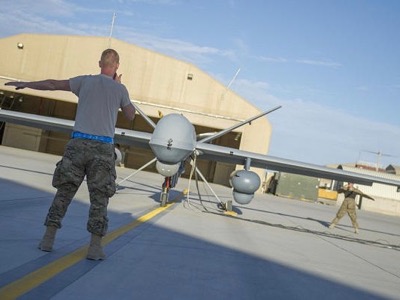
Los militares siempre quieren tener a su disposición la mayor cantidad del armamento ‎existente. Eso sucede con los militares italianos y los drones estadounidenses. ‎También sucede que la mentalidad occidental los lleva a utilizar las tecnologías que ‎están a su alcance, no porque sea necesario usarlas sino sólo porque las tienen. De esa ‎manera, sin ningún tipo de reflexión ni lógica, Italia se ve implicada en las guerras de ‎Estados Unidos en África y en el Medio Oriente ampliado. ‎

 | ROMA (ITALIA)  

JPEG - 31.8 KB
En la Naval Air Station Sigonella, la base que Estados Unidos y la OTAN tienen en la isla italiana ‎de Sicilia, aterrizó, después de 22 horas de vuelo desde la base aérea de Palmdale, en California, ‎el primer drone del sistema AGS (Alliance Ground Surveillance) de la OTAN. Este aparato es una versión ‎mejorada del drone estadounidense Global Hawk. Desde Sigonella, que será en lo adelante su ‎principal base operativa, este drone y otros 4 aparatos similares permitirán “vigilar” –léase ‎“espiar”– vastas extensiones terrestres y marítimas, desde el Mediterráneo hasta el Mar ‎del Norte. ‎

NL -- Manlio Dinucci --“DE KUNST VAN DE OORLOG” Italië in de "Antiterroristische Coalitie"


 Resultado de imagem para pictures of L’Italia nella Coalizione «antiterrorismo»
“DE KUNST VAN DE OORLOG”
Italië in de "Antiterroristische Coalitie"
door Manlio Dinucci


Toen hij de vijf in Irak gewonde soldaten  in Rome verwelkomde, verklaarde minister van Buitenlandse Zaken Luigi Di Maio dat "de Italiaanse staat zich niet zal terugtrekken in het licht van de terroristische dreiging en met alle kracht zal reageren tegen degenen die terreur verspreiden". Hij vloog vervolgens naar Washington om deel te nemen aan een beperkte groep van de "Global Coalition against Daesh", die onder Amerikaans bevel Turkije, Saoedi-Arabië, Qatar, Jordanië en andere landen omvat die vroeger Daesh/Isis en andere soortgelijke terroristische formaties steunden door hen te voorzien van wapens en opleiding (zoals we hier hebben gedocumenteerd).
De Coalitie - waaronder de NAVO, de Europese Unie, de Arabische Liga, de Gemeenschap van Sahel-Saharaanse Staten (CEN-SAD) en Interpol, plus 76 afzonderlijke staten - beweert in haar communiqué van 14 november "Irak en Noord-Oriëntaal Syrië te hebben bevrijd van de controle over Daesh/Isis", hoewel het duidelijk is dat de strijdkrachten van de Coalitie Daesh/Isis met opzet de vrije hand hadden gelaten [1].
Deze terroristische formatie en enkele andere werden pas verslagen toen Rusland militair tussenbeide kwam om de Syrische regeringstroepen te steunen. De coalitie beweert ook dat ze "20 miljard dollar aan humanitaire hulp heeft verstrekt voor de stabilisatie van de Iraakse en Syrische bevolking, en meer dan 220.000 leden van de veiligheidstroepen heeft opgeleid en uitgerust om de lokale gemeenschappen te stabiliseren". Het doel van deze "hulp" is in werkelijkheid niet de stabilisatie, maar de voortdurende destabilisatie van Irak en Syrië, door gebruik te maken van de materiële steun die vooral door de verschillende componenten van het Koerdische onafhankelijkheidsstreven werd geboden en die tot doel zou hebben de nationale staten te vernietigen en hun grondgebied en hun energiebronnen te controleren.
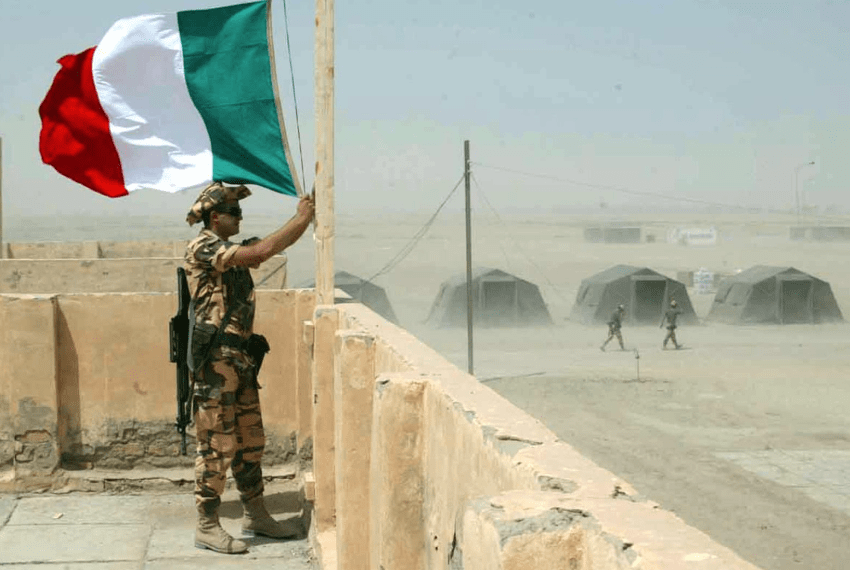
In het kader van deze strategie is Italië, gedefinieerd als "een van de grootste bijdragers van de Coalitie", in Irak voornamelijk betrokken bij de opleiding van de "Koerdische Veiligheidstroepen" (Peshmerga), met name bij het gebruik van antitankwapens, mortieren en geschut, en het gebruik van precisiegeweren in speciale opleidingscursussen voor scherpschutters. Momenteel zijn er ongeveer 1.100 Italiaanse soldaten actief in Irak, verdeeld over verschillende detachementen in verschillende gebieden, voorzien van meer dan 300 landvoertuigen en 12 vliegtuigen, voor een bedrag van 166 miljoen euro in 2019. Naast de eenheid in Irak is er in Koeweït een Italiaanse luchtdivisie gevestigd, met 4 Typhoon gevechtsbommenwerpers, 3 drones en een tankervliegtuig om tijdens de vlucht te tanken.
Naar alle waarschijnlijkheid nemen de Italiaanse special forces, tot wie de vijf gewonde soldaten behoorden, deel aan gevechtsmissies, ook al is hun officiële missie alleen maar training. Het gebruik van speciale eenheden is natuurlijk geheim. Dit wordt momenteel nog meer het geval omdat hun commandocentrum, de Comfose, is overgebracht naar de Folgore-kazerne in Pisa, vlak naast het Camp Darby gebied, het grootste Amerikaanse arsenaal buiten het moederland van de Verenigde Staten, waar ook trainingsactiviteiten plaatsvinden.
In de Coalitie neemt Italië ook de taak op zich om samen met Saoedi-Arabië en de Verenigde Staten leiding te geven aan de "Finacial Group of Opposition to Daesh". Met andere woorden, degenen die de bewapening van de troepen van Isis en andere terroristische formaties hebben gefinancierd en georganiseerd [2]. Aangemoedigd door deze verdiensten heeft de minister van Buitenlandse Zaken Di Maio een voorstel gedaan, dat onmiddellijk werd aanvaard, dat Italië de zetel van de plenaire vergadering van de Coalitie in 2020 zou kunnen zijn. Op die manier zou Italië ook de eer hebben om bepaalde onvermoeibare tegenstanders van het terrorisme zoals Saoedi-Arabië te mogen verwelkomen, dat, na Daesh gefinancierd te hebben, nu zijn oliedollars uitgeeft om zijn terroristische oorlog in Jemen te financieren.
il manifesto, 19 November 2019
Vertaling: Martien
 [1] « Réunion ministérielle de la Coalition internationale contre Daech »,  Voltaire Network, 14 November 2019.
[2] « Arms Airlift to Syria Rebels Expands, With Aid From C.I.A. », par C. J. Chivers and Eric Schmitt, The New York Times, March 14, 2013. « Des milliards de dollars d’armes contre la Syrie », by Thierry Meyssan, Voltaire Network, 18 July 2017.

Thursday, November 28, 2019

EN -- Manlio Dinucci -- « THE ART OF WAR » Italy in the « Antiterrorist Coalition »

Resultado de imagem para pictures of L’Italia nella Coalizione «antiterrorismo»
« THE ART OF WAR »
Italy in the « Antiterrorist Coalition »
by Manlio Dinucci


When he welcomed to Rome the five soldiers who were wounded in Iraq,the Minister for Foreign Affairs Luigi Di Maio declared that « the Italian State will not retreat one centimetre in the face of the Terrorist threat, and will react with all its force against those who spread terror ». He then flew to Washington in order to participate in a reduced group of the « Global Coalition against Daesh » which includes, under US command, Turkey, Saudi Arabia, Qatar, Jordan, and other countries which used to support Daesh/Isis and other similar terrorist formations by supplying them with  weapons and training (as we have documented here).

The Coalition – which includes NATO, the European Union, the Arab League, the Community of Sahel-Saharan States (CEN-SAD) and Interpol, plus 76 singular States – claims in its communiqué of 14 November to have « liberated Iraq and Northern-Oriental Syria from the control of Daesh/Isis », although it is obvious that the forces of the Coalition had deliberately left Daesh/Isis with its hands free [1].

This terrorist formation and a few others were defeated only when Russia intervened militarily in support of the Syrian government forces. The Coalition also claims to have « furnished 20 billion dollars of humanitarian aid for the stabilisation of the Iraqi and Syrian peoples, and trained and equipped more than 220,000 members of the security forces to stabilise the local communities ». The goal of this « aid » is in reality not stabilisation, but the coninued destabilisation of Iraq and Syria, by relying on the instrumental support supplied above all by the various components of Kurdish independentism, aimed at destroying the national States, controling their territory and their energy ressources.

In the framework of this strategy, Italy, defined as « one of the greatest contributors of the Coalition », is engaged in Iraq mainly for the training of the « Kurdish Security Forces » (Peshmerga), notably in the use of anti-tank weapons, mortars and artillery, and the use of precision rifles in special training courses for snipers. Currently, approximately 1,100 Italian soldiers are operating in Iraq, divided into various detatchments in different areas, supplied with more than 300 land vehicles and 12 aircraft, for a cost in 2019 of 166 million Euros. Apart from the unit in Iraq, there is an Italian air division based in Kuwaït, with 4 Typhoon fighter-bombers, 3 Predator drones and a tanker-plane for in-flight refuelling.

In all probability, Italian special forces, to whom the five wounded soldiers belonged, are participating in combat missions even though their official mission is only training. The use of special forces is of course secret. It is presently becoming even more so because their command centre, the Comfose, has been transfered to the Folgore barracks in Pisa right next to the Camp Darby area , which is the largest US arsenal outside of the United States motherland, where training activities also take place.

In the Coalition, Italy also assumes the mission of co-directing the « Finacial Group of Opposition to Daesh » with Saudi Arabia and the United States. In other words, those who financed and organised the arming of the forces of Isis and other terrorist formations [2]. Emboldened by these merits, the Minister for Foreign Affairs Di Maio put forward a proposition, immediately accepted, that Italy could be the seat of the plenary meeting of the Coalition in 2020. In this way, Italy would also have the honour of welcoming certain tireless opponents of terrorism like Saudi Arabia, which, after having financed Daesh, is now spending its petrodollars to finance its terrorist war in Yemen.

il manifesto, 18 November 2019 

TranslationPete Kimberley

[1] « Réunion ministérielle de la Coalition internationale contre Daech »,  Voltaire Network, 14 November 2019.
[2] « Arms Airlift to Syria Rebels Expands, With Aid From C.I.A. », par C. J. Chivers and Eric Schmitt, The New York Times, March 14, 2013. « Des milliards de dollars d’armes contre la Syrie », by Thierry Meyssan, Voltaire Network, 18 July 2017.


DECLARATION OF FLORENCE

Manlio Dinucci
Geographer and geopolitical scientist. His latest books are Laboratorio di geografia, Zanichelli 2014 ; Diario di viaggio, Zanichelli 2017 ; L’arte della guerra / Annali della strategia Usa/Nato 1990-2016, Zambon 2016, Guerra Nucleare. Il Giorno Prima 2017; Diario di guerra Asterios Editores 2018, Premio internazionale per l'analisi geostrategica assegnato il 7 giugno 2019 dal Club dei giornalisti del Messico, A.C.

F. William Engdahl -- Could Russia Floating Nuclear Plants Change World Economy?


25.11.2019 Author: F. William Engdahl
Column: Economics
AL534523
While the EU and United States have all but abandoned nuclear energy as a future power source, with almost no new reactors being built and existing ones being decommissioned, Russia has quietly emerged as the world’s leading builder of peaceful civilian nuclear power plants. Now the Russian state nuclear company, Rosatom, has completed the first commercial floating nuclear plant and has successfully towed it to its ultimate location in the Russian Far East where access to power is difficult. It could transform the energy demands of much of the developing world, in addition to Russia. An added plus is that nuclear plants emit zero carbon emissions so that political opposition based on CO2 does not apply.
The floating power plant, named Akademik Lomonosov, houses two 35-megawatt reactors, based on the design of the nuclear plants aboard the successful fleet of Russian nuclear-powered icebreakers and capable of providing 70 MW electric power to city of 100,000.By comparison a typical on-land nuclear station in the USA or Europe is 1,000 MW in size making them suitable only for densely populated industrialized areas.
The smaller reactors are far cheaper to build once they go into multiple-unit production and are far more flexible for locations in developing regions of Asia or Africa where lack of reliable electricity is a major constraint to economic development. The construction and installation cost for the Lomonosov is reportedly $480 million, or about $6.90 per watt, slightly more than an average conventional plant.
It is designed to last 40 years before being towed away to a special location in Russia for decommissioning, similar to the process for nuclear-powered ships. The special vessel is some 140 meters long and 30 meters wide. The design features well-proven Russian-built nuclear reactors used reliably for some five decades to power its nuclear icebreaker fleet, the world’s largest. The vessel itself has been designed to be capable of withstanding a tsunami or even a collision with land or a ship. It is designed to be stationed at a specially fixed site on sea and connected to land via underwater cables.The floating units can act as cogeneration facilities capable of feeding the grid and for desalinating large quantities of seawater making them attractive to the Middle East and other countries with water problems.
In September the Akademik Lomonosov reached its destination at Pevek, in the remote northern autonomous district of Chukotka, where it will be connected from a fixed site offshore to the grid by year end. It is the only operating floating nuclear reactor power plant in existence today, a significant accomplishment given the massive Western economic sanctions on Russia since 2014. The offshore Lomonosov will more than replace the existing small nuclear plant at Bilibino, currently the smallest and the northernmost operating nuclear power plant in the world, which is being decommissioned as well as a small conventional plant.
Why Floating?
The idea to build a nuclear power reactor on a special barge or floating platform has major advantages. First because the reactor units are far smaller and designed for floating offshore sites, they can be modular or produced in a factory, giving major economic savings over conventional nuclear plants. Typically, conventional nuclear reactors must be entirely custom made on site making them enormously expensive and years in the construction, as much as 18 years in some cases. The small floating reactors could be scaled up to support areas with limited energy resources. And finding  large land space for siting is not a problem.
The Akademik Lomonosov was built at the state-owned Baltiysky Zavod (Baltic Shipyard)a special shipyard at St. Petersburg building nuclear icebreakers. It was then towed over a period of weeks from Murmansk to its destination at Pevek. Pevek is a key port in Russia’s Northern Sea Route. The company Rosenergoatom stated, “As the floating plant is going to be located in Pevek, it will boost the social and economic development of the Chaun municipal district specifically and Chukotka in general. In addition, it will become one of the key infrastructure elements within the Northern Sea Route development program.” Recently Russia has been developing the Northern Sea Route to Asia in the Arctic waters to transport Russian liquified natural gas to China and other Asian markets. Several more floating nuclear power plants are planned along the route as the trade expands.
Russia has the world’s largest fleet of nuclear-powered icebreakers, a well-developed experience base to build their floating reactors which use the same basic reactor. The Baltiysky shipyard, one of Russia’s largest,contains all necessary supporting industries: engineering department, woodwork production, marine machine building, power engineering, metallurgical production, research and development department and the shipyard itself. The completion of the Lomonosov is a major feat given that the parent company, United Shipbuilding Corporation,was sanctioned in 2014 by the US Treasury over Ukraine and Crimea.
Initially the offshore nuclear plants will be built for remote areas of Russia difficult to power, especially in the mineral and oil rich, but remote, far north. As well, future reactors will be used to power offshore oil and gas platforms in the remote regions. After successful operation of the Lomonosov reactor, plans are to build a fleet of the floating platforms to give cities and towns across Russia electricity including for heating homes and businesses, opening major new possibilities of economic development.Another possible use for floating nuclear plants like Lomonosov is to power desalination plants, where the makers say it is capable of providing 240,000 cubic meters of fresh water daily.
Another advantage of the Russian floating power plants is the fact that they are being built in a major shipyard using tested manufacturing methods rather than on site. This will ultimately bring cost of production quite significantly down as new units are built, making them feasible and affordable for smaller developing countries. Further,nuclear power has critical advantages in that it isn’t intermittent like solar or wind. The reactor fuel for the Akademik Lomonosov lasts 12 years before it must be changed.
Emerging Markets
At the recent ASEAN meeting of Southeast Asian nations, Russian Prime Minister Dmitry Medvedev held discussions he termed “very promising” about sales of the Russian floating reactors. Medvedev told The Bangkok Post that Russia’s state-owned Rosatom, was open to do deals with Association of Southeast Asian Nations (ASEAN) states. “Talks are underway with some ASEAN countries on the construction of new centers for nuclear science and technology,” he said.
The October 2019  first Russia-Africa summit in Sochi at which Russia declared $20 billion Soviet-era debts of the various African countries to be forgiven, potentially opens another possible new area where Russian nuclear technology, particularly the smaller low-cost Floating Nuclear Power Plants based on success of the Lomonosov, could provide major new energy prospects to develop Africa. To date Russia has been engaged designing a large on-land nuclear power complex in Egypt for four larger units at the El Dabaa NPP site where Russia also granted major low-interest loans.When complete in 2026 it is expected to provide up to 50% of Egypt’s power needs. Russia is also in a nuclear energy discussion with Ethiopia. The fact that Russia today is the most active civilian nuclear contractor in the world is also a major advantage in marketing.
With its floating nuclear plant design Russia is currently in a unique position. The only other country actively developing a floating nuclear plant design, China, is far behind Russia, as its own prototype is still reported in the design phase.  Safety, size and flexibility argue that with the new development, Russia can make a major contribution to the global economy. And for those who believe CO2 is a problem, the technology is emission free.
F. William Engdahl is strategic risk consultant and lecturer, he holds a degree in politics from Princeton University and is a best-selling author on oil and geopolitics, exclusively for the online magazine “New Eastern Outlook.”


assange


At midday on Friday 5 February, 2016 Julian Assange, John Jones QC, Melinda Taylor, Jennifer Robinson and Baltasar Garzon will be speaking at a press conference at the Frontline Club on the decision made by the UN Working Group on Arbitrary Detention on the Assange case.

xmas


the way we live

MAN


THE ENTIRE 14:02' INTERVIEW IS AVAILABLE AT

RC


info@exopoliticsportugal.com

BJ 2 FEV


http://benjaminfulfordtranslations.blogspot.pt/


UPDATES ON THURSDAY MORNINGS

AT 08:00h UTC


By choosing to educate ourselves and to spread the word, we can and will build a brighter future.

bj


Report 26:01:2015

BRAZILIAN

CHINESE

CROATIAN

CZECK

ENGLISH

FRENCH

GREEK

GERMAN

ITALIAN

JAPANESE

PORTUGUESE

SPANISH

UPDATES ON THURSDAY MORNINGS

AT 08:00 H GMT


BENJAMIN FULFORD -- jan 19


UPDATES ON THURSDAY MORNINGS

AT 08:00 H GMT

PressTV News Videos