Labels

SUPPORT JULIAN ASSANGE

Showing posts with label F. William Engdahl. Show all posts

Saturday, December 28, 2019

PT --Full Spectrum Dominance -- Capítulo Onze -- Parte 2

CAPÍTULO ONZE -- Parte 2


Africom, China e Guerras de Recursos/Matérias Primas
Apenas algumas semanas após o Presidente George W. Bush assinar a Ordem que criou o AFRICOM, o novo comando militar dos EUA dedicado à África, vários acontecimentos sinistros eclodiram no continente rico em minerais. Essas ocorrências sugeriam que um programa importante da Presidência Obama seria concentrar os recursos dos EUA - militares e outros – para lidar com as quatro áreas principais de África: a República do Congo; o Golfo da Guiné, rico em petróleo; a região de Darfur, rica em petróleo, no sul do Sudão; e cada vez mais, a “ameaça de pirataria” da Somália às rotas marítimas, no Mar Vermelho e no Oceano Índico. (21)
O continente africano contém o que a maioria dos geólogos acredita ser a riqueza mineral mais abundante do planeta. Com a China, a Rússia, a Índia e outros 'rivais' potenciais dos EUA a começar a desenvolver laços com várias nações africanas e com as suas matérias-primas, a resposta de Washington foi clara – prevalecer pela força militar.
A República Democrática do Congo tinha sido renomeada de República do Zaire, em 1997, quando as forças de Laurent Désiré Kabila (pai do Presidente Joseph Kabila) tinham terminado os trinta e dois anos do reinado de terror de Mobutu. Os moradores continuaram a designar o país como Congo-Kinshasa.
Mapa
O Grande Vale da Fenda (Rift), em África, possui a maior concentração de matérias primas do mundo e, consequentemente, é a causa das guerras pelo controlo das mesmas.

Monday, December 16, 2019

F. William Engdahl -- The Bogus Legend of Paul Volcker


14.12.2019 Author: F. William Engdahl
Column: Economics
VC34223
Paul Volcker, former chairman of the Federal Reserve during the 1980’s, has died at age 92. Major media are writing words of praise for the banker who “killed inflation” in the wake of the 1970’s oil crises and food price crisis. Volcker’s true legacy is far less positive. No one person did more to bring about the dysfunctional debt-bloated financial system we have today than the former Chase Manhattan Bank economist who spent most of his life in the employ of America’s most powerful oligarch family.
Two major events define the true Volcker legacy. First was in August 1971 when he was a senior official in the US Treasury under Nixon. The second was as Jimmy Carter’s Fed chairman beginning in October 1979. These define the events that led to the deindustrialization of the United States and the economic collapse of most of the once-developing world beginning four decades ago.
The Break with Gold
During the 1960’s the US economy began a serious crisis of under-investment. The world-class industries built up during and just after World War II, from steel to aluminum to Detroit cars were all badly in need of modernization and investment. Europe had rebuilt its industry after the devastation of the war and especially Germany and France were competing with US on the world market with often more advanced state-of-the-art industry. Their economies were earning dollar surpluses for their exports. The problem was that those US dollars were no longer backed by the world’s strongest economy.
By the beginning of the 1960s, as Europe began to grow at rates outpacing that of the United States, it was becoming clear to many that something had to change in the fixed Bretton Woods arrangement. But Washington, under the growing influence of the powerful New York banking community, led by Citibank and David Rockefeller’s Chase Manhattan Bank, refused to play by the very rules it had imposed on its allies in 1944. New York banks began to invest abroad in new sources of higher profits. This vast outflow of vital investment capital turned the decade of the 1960s into a succession of ever worsening international monetary crises.
New York’s international banks were earning huge profits by walking away from investing in America’s future. Between 1962 and 1965, U.S. corporations in western Europe earned between 12 and 14 per cent return, according to a January 1967 Presidential Report to Congress, double that for US industry investment. By the end of the 1960’s European central banks were holding large dollar surpluses from trade and investment, urged by Washington not to redeem them for gold as allowed under Bretton Woods.

Thursday, November 28, 2019

F. William Engdahl -- Could Russia Floating Nuclear Plants Change World Economy?


25.11.2019 Author: F. William Engdahl
Column: Economics
AL534523
While the EU and United States have all but abandoned nuclear energy as a future power source, with almost no new reactors being built and existing ones being decommissioned, Russia has quietly emerged as the world’s leading builder of peaceful civilian nuclear power plants. Now the Russian state nuclear company, Rosatom, has completed the first commercial floating nuclear plant and has successfully towed it to its ultimate location in the Russian Far East where access to power is difficult. It could transform the energy demands of much of the developing world, in addition to Russia. An added plus is that nuclear plants emit zero carbon emissions so that political opposition based on CO2 does not apply.
The floating power plant, named Akademik Lomonosov, houses two 35-megawatt reactors, based on the design of the nuclear plants aboard the successful fleet of Russian nuclear-powered icebreakers and capable of providing 70 MW electric power to city of 100,000.By comparison a typical on-land nuclear station in the USA or Europe is 1,000 MW in size making them suitable only for densely populated industrialized areas.
The smaller reactors are far cheaper to build once they go into multiple-unit production and are far more flexible for locations in developing regions of Asia or Africa where lack of reliable electricity is a major constraint to economic development. The construction and installation cost for the Lomonosov is reportedly $480 million, or about $6.90 per watt, slightly more than an average conventional plant.
It is designed to last 40 years before being towed away to a special location in Russia for decommissioning, similar to the process for nuclear-powered ships. The special vessel is some 140 meters long and 30 meters wide. The design features well-proven Russian-built nuclear reactors used reliably for some five decades to power its nuclear icebreaker fleet, the world’s largest. The vessel itself has been designed to be capable of withstanding a tsunami or even a collision with land or a ship. It is designed to be stationed at a specially fixed site on sea and connected to land via underwater cables.The floating units can act as cogeneration facilities capable of feeding the grid and for desalinating large quantities of seawater making them attractive to the Middle East and other countries with water problems.
In September the Akademik Lomonosov reached its destination at Pevek, in the remote northern autonomous district of Chukotka, where it will be connected from a fixed site offshore to the grid by year end. It is the only operating floating nuclear reactor power plant in existence today, a significant accomplishment given the massive Western economic sanctions on Russia since 2014. The offshore Lomonosov will more than replace the existing small nuclear plant at Bilibino, currently the smallest and the northernmost operating nuclear power plant in the world, which is being decommissioned as well as a small conventional plant.
Why Floating?
The idea to build a nuclear power reactor on a special barge or floating platform has major advantages. First because the reactor units are far smaller and designed for floating offshore sites, they can be modular or produced in a factory, giving major economic savings over conventional nuclear plants. Typically, conventional nuclear reactors must be entirely custom made on site making them enormously expensive and years in the construction, as much as 18 years in some cases. The small floating reactors could be scaled up to support areas with limited energy resources. And finding  large land space for siting is not a problem.
The Akademik Lomonosov was built at the state-owned Baltiysky Zavod (Baltic Shipyard)a special shipyard at St. Petersburg building nuclear icebreakers. It was then towed over a period of weeks from Murmansk to its destination at Pevek. Pevek is a key port in Russia’s Northern Sea Route. The company Rosenergoatom stated, “As the floating plant is going to be located in Pevek, it will boost the social and economic development of the Chaun municipal district specifically and Chukotka in general. In addition, it will become one of the key infrastructure elements within the Northern Sea Route development program.” Recently Russia has been developing the Northern Sea Route to Asia in the Arctic waters to transport Russian liquified natural gas to China and other Asian markets. Several more floating nuclear power plants are planned along the route as the trade expands.
Russia has the world’s largest fleet of nuclear-powered icebreakers, a well-developed experience base to build their floating reactors which use the same basic reactor. The Baltiysky shipyard, one of Russia’s largest,contains all necessary supporting industries: engineering department, woodwork production, marine machine building, power engineering, metallurgical production, research and development department and the shipyard itself. The completion of the Lomonosov is a major feat given that the parent company, United Shipbuilding Corporation,was sanctioned in 2014 by the US Treasury over Ukraine and Crimea.
Initially the offshore nuclear plants will be built for remote areas of Russia difficult to power, especially in the mineral and oil rich, but remote, far north. As well, future reactors will be used to power offshore oil and gas platforms in the remote regions. After successful operation of the Lomonosov reactor, plans are to build a fleet of the floating platforms to give cities and towns across Russia electricity including for heating homes and businesses, opening major new possibilities of economic development.Another possible use for floating nuclear plants like Lomonosov is to power desalination plants, where the makers say it is capable of providing 240,000 cubic meters of fresh water daily.
Another advantage of the Russian floating power plants is the fact that they are being built in a major shipyard using tested manufacturing methods rather than on site. This will ultimately bring cost of production quite significantly down as new units are built, making them feasible and affordable for smaller developing countries. Further,nuclear power has critical advantages in that it isn’t intermittent like solar or wind. The reactor fuel for the Akademik Lomonosov lasts 12 years before it must be changed.
Emerging Markets
At the recent ASEAN meeting of Southeast Asian nations, Russian Prime Minister Dmitry Medvedev held discussions he termed “very promising” about sales of the Russian floating reactors. Medvedev told The Bangkok Post that Russia’s state-owned Rosatom, was open to do deals with Association of Southeast Asian Nations (ASEAN) states. “Talks are underway with some ASEAN countries on the construction of new centers for nuclear science and technology,” he said.
The October 2019  first Russia-Africa summit in Sochi at which Russia declared $20 billion Soviet-era debts of the various African countries to be forgiven, potentially opens another possible new area where Russian nuclear technology, particularly the smaller low-cost Floating Nuclear Power Plants based on success of the Lomonosov, could provide major new energy prospects to develop Africa. To date Russia has been engaged designing a large on-land nuclear power complex in Egypt for four larger units at the El Dabaa NPP site where Russia also granted major low-interest loans.When complete in 2026 it is expected to provide up to 50% of Egypt’s power needs. Russia is also in a nuclear energy discussion with Ethiopia. The fact that Russia today is the most active civilian nuclear contractor in the world is also a major advantage in marketing.
With its floating nuclear plant design Russia is currently in a unique position. The only other country actively developing a floating nuclear plant design, China, is far behind Russia, as its own prototype is still reported in the design phase.  Safety, size and flexibility argue that with the new development, Russia can make a major contribution to the global economy. And for those who believe CO2 is a problem, the technology is emission free.
F. William Engdahl is strategic risk consultant and lecturer, he holds a degree in politics from Princeton University and is a best-selling author on oil and geopolitics, exclusively for the online magazine “New Eastern Outlook.”


Tuesday, November 19, 2019

F. William Engdahl -- China, USA and the Geopolitics of Lithium


By F. William Engdahl

18 November 2019

China, USA and the Geopolitics of Lithium
Image credits: Smnt License: This file is licensed under the Creative Commons Attribution-Share Alike 4.0 International license with some rights reserved 
https://bit.ly/330t1jw
For several years since the global push to develop mass-scale Electric Vehicles, the element Lithium has come intofocus as a strategic metal. Demand is enormous in China, in the EU and in the USA at present, and securing control over lithium supplies is already developing its own geopolitics not unlike that for the control of oil .
China Moves to Secure Sources
For China, which has set major targets to become the world’s largest producer of EVs, developing lithium battery materials is a priority for the 13th Five-Year Plan (2016-20) period. Though China has its own lithium reserves, recovery is limited, and China has gone to secure lithium mining rights abroad.
In Australia Chinese company Talison Lithium, controlled by Tianqi, mines and owns the world’s largest and highest grade spodumene reserves in Greenbushes, Western Australia near Perth.
Talison Lithium Inc. is the world’s largest primary lithium producer. Their Greenbushes site in Australia produces today some 75% of China’s lithium demands and about forty percent of world demand. This as well as other vital Australian raw materials, has made relations with Australia, traditionally a firm US ally, of strategic importance to Beijing. As well, China has become the largest trade partner for Australia.
However China’s growing economic influence in the Pacific around Australia led Prime Minister Scott Morrison to send a warning message to China not to challenge Australia’s strategic backyard region. In late 2017 Australia, with growing concern over expanding Chinese influence in the region, resumed informal cooperation in what is sometimes called the Quad,with USA, India and Japan, reviving an earlier attempt to check Chinese influence in the South Pacific. Australia has also recently stepped up lending to strategic Pacific island nations to counter China’s lending. All this clearly makes it imperative for China to go global to other sites to secure its lithium in order to become the key player in the emerging EV economy over the coming decade.
As development of electric vehicles became priority in Chinese economic planning, the search for secure lithium turned to Chile,another major source of the lithium. There,China’s Tianqiis amassing a major share of Chile’s Sociedad Quimica Y Minera (SQM), one of the world’s largest lithium producers. If China’s Tianqi succeeds in gaining control of SQM it will change the geopolitics of world lithium control according to mining industry reports.
The global supply of lithium metals, a strategic component of lithium-ion batteries used to power electric vehicles (EVs) is concentrated in a very few countries.

F. William Engdahl -- How A Rockefeller Foundation Project Destroyed Our Food

Dear Reader,

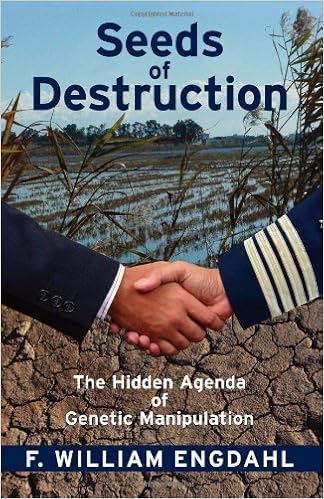
I want to share a section from my bestselling book, Seeds of Destruction: The Hidden Agenda of Genetic Manipulation. It deals with the origins of one of the least-discussed projects, one that has had the greatest consequences for human health and well-being. It is a project financed and sponsored beginning in the 1950’s by a tax exempt US foundation built on a fortune in oil. It gave rise to the transformation of family farming into vertically-integrated, solely-for-profit agriculture. They even gave it a name-- agribusiness.  The results we have today where once rich, productive farms have been turned into contract units of multinational corporations whose main goal is shareholder value not nutrition.

I hope you find it useful and interesting and, if you haven’t, please consider buying the book or making a support contribution via my website PayPal to allow us to maintain free content in a time of growing media suppression of free thought on the internet.

With best regards,

William Engdahl


Chapter 7


A Green Revolution Opens the Door

The Rockefellers’ Green Revolution began in Mexico and was spread across Latin America during the 1950’s and 1960’s. Shortly thereafter, backed by John D. Rockefeller’s networks across Asia, it was introduced in India and elsewhere in Asia. The “revolution” was a veiled effort to gain control over food production in key target countries of the developing world, promoted in the name of free enterprise market efficiency against alleged “communist inefficiency.”

In the aftermath of World War II, with Germany’s I.G. Farben a bombed-out heap of rubble, American chemical companies emerged as the world’s largest. The most prominent companies—DuPont, Dow Chemical, Monsanto, Hercules Powder and others—faced a glut of nitrogen production capacity which they had built up, at US taxpayer expense, to produce bombs and shells for the war effort. An essential chemical for making bombs and explosives, nitrogen was a prime component of TNT and other high explosives. Nitrogen could also form the basis for nitrate fertilizers. The chemical industry developed the idea of creating large new markets for their nitrogen in the form of fertilizers, ammonia nitrate, anhydrous ammonia, for both domestic US agriculture and for export. The nitrogen fertilizer industry was part of the powerful lobby of the Rockefeller Standard Oil circles which, by the end of the War, included DuPont, Dow Chemicals, Monsanto and Hercules Powder among others.

The global marketing of the new agri-chemicals after the war also solved the problem of finding significant new markets for the American petrochemical industry as well as the grain cartel, a group of four to five companies then including Cargill, Continental Grain, Bunge and ADM. The largest grain traders were American and their growth was a product of the development of special hybrid seeds through the spread of the Green Revolution in the 1960’s and 1970’s. Agriculture was in the process of going global and the Rockefeller Foundation was shaping that process of agribusiness globalization.

With a monopoly on the agricultural chemicals and on the hybrid seeds, American agribusiness giants were intent on dominating the global market in agricultural trade. As Kissinger noted in the 1970’s, “If you control the food you control the people.” Governments from the developing sector to the European Economic Community, the Soviet Union and China, soon depended on the powerful grain cartel companies to provide the needed grains and food products to maintain their political stability in times of bad harvest.

Sunday, November 10, 2019

PT --Full Spectrum Dominance -- Capítulo Onze -- Parte 1

Resultado de imagem para pictures of the book Full Spectrum Dominance


ou
DOMÍNIO DA UNIVERSALIDADE

CAPÍTULO ONZE -- Parte 1
Full Spectrum Dominance ou Loucura Completa?
‘Potencialmente, o cenário mais perigoso seria uma grande coligação da China, Rússia e talvez do Irão, uma coligação 'anti-hegemónica' unida não pela ideologia, mas por queixas complementares ...
Para evitar essa contingência ... será necessário uma exibição da prontidão geo-estratégica dos EUA, simultaneamente, nos perímetros ocidental, leste e sul da Eurásia, . '
- Zbigniew Brzezinski, Conselheiro do candidato Obama (1)

 Geopolitica Euroasiática
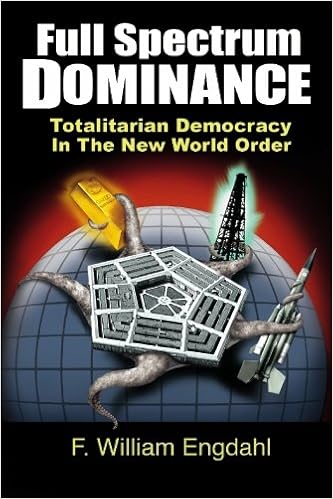
Durante os oito anos da presidência de Bush, a escala das despesas militares dos EUA passou por uma transformação radical. O orçamento oficial anual do Pentágono, incluindo as guerras do Iraque e do Afeganistão e as suas consequências sangrentas, aumentou para além de todos os precedentes. No ano fiscal de 2001, antes da declaração da Guerra ao Terror influenciar as despesas, o Pentágono gastou 333 biliões de dólares em armas e mão-de-obra em todo o mundo para “defender a democracia” e acima de tudo, o que foi definido como os “interesses da segurança nacional” dos EUA. Em 2009, a soma anual mais do que duplicou, quando as despesas do Iraque e do Afeganistão foram incluídas, subiu para 711 biliões de dólares. (2)
Em comparação com o resto das despesas militares no mundo, os montantes gastos por Washington foram ainda mais impressionantes. Os Estados Unidos eram, de longe, o líder global em despesas militares: em 2008, despenderam mais do que os 45 países que, juntos, tinham os maiores gastos do mundo. O Pentágono e o orçamento correspondente representavam 48% do total das despesas militares do mundo, quase metade de cada dólar militar. Comparados com os rivais em potência, os EUA empregaram nas suas forças armadas quase seis vezes mais que a China, dez vezes mais do que a Rússia e quase cem vezes mais que o Irão. A China, com o segundo maior orçamento de defesa do mundo, gastou 122 biliões ou, aproximadamente, um sexto da despesa militar dos EUA.
Quando os orçamentos militares combinados dos Estados Unidos e de todos os seus aliados da NATO, bem como dos principais aliados no Pacífico - Japão, Coreia do Sul e Austrália - foram totalizados, a aliança dominada pelos EUA gastou anualmente 1,1 trilião nas suas forças armadas combinadas, representando 72% do total mundial de despesas militares. (3) Se apenas os dólares e os equipamentos fossem o único critério, o mundo seria, há muito tempo, uma colónia impotente sob o Domínio Total do Espectro dos EUA.
A extensão das bases militares permanentes dos EUA, durante esse período de oito anos, expandiu-se enormemente do Médio Oriente para a Ásia Central, para o Afeganistão, Paquistão e por toda a África. O Pentágono tinha instalado todas as armas do seu arsenal: conquista militar bruta, no Iraque; mudança de regime de “poder brando” para as ditaduras pró-EUA, nas antigas repúblicas soviéticas da Ucrânia e da Geórgia; e apoio a "Estados falidos" como o Kosovo.
O foco estratégico dessa esmagadora formação militar dos EUA foi o controlo de possíveis rivais no continente eurasiático, mais precisamente, da Rússia e da China.
Kosovo: o Estado da Máfia de Washington nos Balcãs

Saturday, November 2, 2019

PT -- CAPÍTULO DEZ -- FULL SPECTRUM DISCLOSURE -- Parte 3

Resultado de imagem para pictures of the book Full Spectrum Dominance


ou
DOMÍNIO DA UNIVERSALIDADE


CAPÍTULO DEZ - Parte 3
11 de Setembro de 2001
A convocação do Vice Secretário da Defesa, Wolfowitz, Donald Rumsfeld e outros, imediatamente após 11 de Setembro de 2001, para lançar um ataque militar ao Iraque, em vez de perseguir o suposto mentor, Osama bin Laden, levou muitos investigadores astutos a perguntar se os ataques de 11 de Setembro 2001 eram, de facto, o “novo Pearl Harbor” pelos quais os autores do relatório da PNAC tinham rezado.
Um número crescente de cidadãos críticos começou a questionar as acusações contra Osama bin Laden, como sendo o mentor de 19 terroristas árabes. A ideia de que esses terroristas poderiam comandar, apenas com x-actos primitivos, quatro jactos comerciais sofisticados da Boeing e redirecionar três deles, com sucesso, como pilotos amadores aparentemente mal treinados, em manobras aéreas que os pilotos experientes alegavam ser quase impossíveis, estava a criar uma descrença crescente entre os americanos comuns, sobre a versão oficial do governo dos EUA.
O que ficou mais claro nos meses após o 11 de Setembro foi, que o ataque, no mínimo, foi claramente usado de imediato pelo governo Bush, como pretexto para iniciar uma guerra contra o Islão, intitulada 'Guerra ao Terror', o ‘Choque de Civilizações’, que o Professor de Harvard, Samuel Huntington, descreveu no início dos anos 90.

Tuesday, October 15, 2019

F. William Engdahl -- Are We Blocking Out the Sun?


15.10.2019 Author: F. William Engdahl
Column: Society
Region: Europe
Are We Blocking Out the Sun?
Climate change is real. However, serious scientific evidence is pointing to a very different causality than most discuss. Climate is a huge subject, an immensely complex one. There is controversy around whether we must implement drastic new taxes on fuels or other measures to reduce or “capture” CO2 to reduce Man-Made Global Warming. So far however, there are strong indications we are ignoring what might be a far greater factor in our climate and in increasing occurrence of severe weather around the world, from hurricanes to volcanic eruptions to earthquakes to severe cold, severe warm and severe rainfall. One causal factor being ignored in all the discussion is what influence solar activity has on our climate. We might well be ignoring this to our peril.
Sunspots and solar minimum
Pretty much everything in nature moves in some form of cycle, whether it is the Earth around the Sun or the moon around the Earth. Those cycles have been known for ages to influence the ocean tides or growing seasons. What is less known is the fact that there are cycles to solar eruptions, giant electromagnetic storms often called sunspots. It has been measured over time that solar cycles have short cycles of approximately 11 years.
According to the US NASA, “The solar cycle is the cycle that the Sun’s magnetic field goes through approximately every 11 years…The solar cycle affects activity on the surface of the Sun, such as sunspots which are caused by the Sun’s magnetic fields.” These shorter 11 year cycles take place within longer cycles of around 90 to 100 years, 200 years or longer.
Astrophysicists measure such cycles from the number of sunspots daily by year. It takes eleven years to proceed from minimum solar eruption year to a peak and down to the next minimum–think sine waves. That means the number of solar eruptions is at a minimum before beginning the next cycle of 11 year rise and fall. The relevant point for us on earth is that those giant solar eruptions, as well as the relative absence of same, have huge impact on our earth and on climate. The sunspot activity has been noted and measured for about 350 years.
What is less well understood but empirically measured are the larger longer wave cycles of sunspot rise and decline. In 2019 we are at the apparent bottom of what is called Cycle 24. If the present spotless pattern continues to year-end 2019 it could be perhaps the deepest Solar Minimum of a century. Notable here is that the peak number of sunspots has been declining with each cycle since Cycle 22 that began in around 1986. Some scientists predict that Cycle 25 in 2020 will begin a series of even more unusually low sunspot activity lasting perhaps into 2055 or even longer. If so, it will have significant influence on our climate and weather.

Wednesday, September 18, 2019

PT -- CAPÍTULO DEZ -- FULL SPECTRUM DISCLOSURE -- Parte 2

Resultado de imagem para pictures of the book Full Spectrum Dominance


ou
DOMÍNIO DA UNIVERSALIDADE


CAPÍTULO DEZ - Parte 2

A falsidade da equipa B de Rumsfeld e Bush  
Durante o seu mandato como Secretário da Defesa, depois de 1975, Rumsfeld lutou para aumentar bastante o orçamento da defesa e fortalecer as forças estratégicas e convencionais dos EUA. Ele afirmou, juntamente com a ‘Equipa B’ de Bush, o então Director da CIA, que as tendências comparativas da força militar soviética e americana tinham uma desvantagem para os Estados Unidos de 15 a 20 anos e que, se continuassem, teriam o efeito de introduzir uma instabilidade fundamental no mundo.
A equipa B tinha sido criada, com a aprovação do Presidente Gerald Ford, em 1976, pelo então Director da CIA, Bush Sénior. A sua missão era propor uma avaliação alternativa da ameaça militar soviética à CIA, sob o seu antigo Director, William Colby.
Quando Colby foi procurado, em 1975, pelo Conselho Consultivo de Inteligência Estrangeira do Presidente para organizar um painel externo de especialistas para desafiar a CIA, Colby recusou, alegando que era desnecessário. Significativamente, Colby foi demitido durante o vergonhoso 'Halloween Massacre'  de Gerald Ford e foi substituído por Bush Sénior como Director da CIA, em 1976. O homem que orquestrou o massacre foi o Chefe do Gabinete do Presidente, Donald Rumsfeld.
A equipa B chegou à conclusão de que os soviéticos tinham desenvolvido várias armas novas, apresentando uma frota submarina de armas nucleares que usava um sistema de sonar que não dependia do som e era, portanto, indetectável pela tecnologia existente.
A análise que a Equipa B produziu, foi apontada,  posteriormente, como sendo falsa. De acordo com a Dra. Anne Cahn, da Agência de Controlo e Desarmamento de Armas, 1977-1980:
Diria que foi tudo uma fantasia ... se examinarem a maioria dos argumentos específicos da Equipa B sobre sistemas de armas, e se os examinarem, um a um, estavam todos errados. (23)

Tuesday, September 17, 2019

Will the US Farming Crisis Determine the Next President? By F. William Engdahl


By F. William Engdahl

16 September 2019
Will the US Farming Crisis Determine the Next President?
Image credits: U.S. Department of Agriculture NRCS photo - Public domain but use of appropriate byline/photo/image credits is requested.https://www.usda.gov/policies-and-links
The American farm sector is undergoing its worst crisis since the 1980’s. Extreme snow and then unusually heavy rainfall across the Midwest farm belt this spring and summer have severely delayed or reduced crop plantings. That comes after several years of falling farm income. A US EPA series of waivers to the oil industry then sharply cut the market for corn ethanol. To make matters worse, in retaliation for Trump Administration tariffs on China goods, China has halted all import of US farm products. All this comes as US farmers struggle with record high debt with bankruptcies spreading. Some compare the situation to the crises of the Great Depression in agriculture. Farm production has long been a major pillar of the US economy and exports. Could this little-noted farm crisis become a factor that could determine if Donald Trump wins or loses re-election in 2020 ?
The Ethanol Fiasco
At a time when farm income has fallen dramatically over the past several years, the Trump Environmental Protection Administration just dealt a further severe blow to the market for corn used to produce ethanol for E10 fuels. On August 9, the EPA announced that it had approved 31 of its 38 pending small refinery exemptions, allowing the oil refiners to avoid mandatory blending of gasoline with corn ethanol. The approvals were retroactive to 2018, in violation of the Biofuels law, and allowed oil refiners to evade mandatory blending of more than 1 billion gallons of corn-based ethanol, a huge blow to US corn growers.
To make matters worse, the pro-oil Trump EPA, first under Scott Pruitt, a strong backer of the oil industry, and now his successor, Andrew Wheeler, a former lobbyist for the coal industry, have granted a record number of oil refiner exemptions including to companies like Chevron and ExxonMobil, in direct violation of a law intended to help only small distressed refiners. The exemptions are to date some four times what was exempted under the Obama administration resulting in a major loss of corn ethanol consumption.
Acting retroactively, the EPA granted the equivalent of over 4 billion gallons of ethanol exemptions for the period 2016 through 2018, equivalent to losing a 1.4 billion bushel corn crop, the entire annual harvest of Minnesota, a major corn state. The US ethanol lobby organizations are demanding the Trump Administration restore that lost ethanol volume as required by law. Emily Skor, CEO of Growth Energy, an ethanol association, stated, “More biofuel plants are closing their doors with each passing week, and farm families have run out of options. The EPA must take immediate action to restore lost demand under the 2020 biofuel targets and repair the damage from abusive refinery exemptions granted to oil giants like Exxon and Chevron.”

Friday, September 13, 2019

F. William Engdahl -- September 11, 2001

Resultado de imagem para pictures of the book Full Spectrum Dominance

F. William Engdahl -- September 11, 2001
Excerpt of Chapter TEN from the book ‘Full Spectrum Dominance’
The call by Deputy Defense Secretary Wolfowitz, Donald Rumsfeld and others immediately after September 11, 2001 to launch a military assault on Iraq, rather than go after the alleged mastermind, Osama bin Laden, led many astute investigators to ask whether the attacks of September 11, 2001 were in fact the “new Pearl Harbor” the authors of the PNAC report had been praying for.
A growing number of critical citizens began to question the accusations against an elusive Osama bin Laden as mastermind of 19 Arabicspeaking terrorists. The idea that they could commandeer, with only primitive boxcutters, four sophisticated Boeing commercial jets and redirect three of them, successfully, as apparently poorly-trained amateur pilots in air maneuvers which seasoned pilots claimed were near impossible, was creating growing disbelief among ordinary Americans in the official US Government version of the events.
What became clearer in the months after 9-11 was that the attack was clearly used immediately by the Bush Administration, at the very least, as the pretext to launch a war on Islam under the name of a ‘War on Terror,’ the ‘Clash of Civilizations,’ which Harvard Professor Samuel Huntington outlined in the early 1990’s.
Many senior international intelligence experts began to put forward the possibility that the attacks of September 11, 2001 had been a “False Flag” operation.
Eckehardt Werthebach, former president of Germany’s domestic intelligence service, BundesVerfassungsschutz, told the press just after 9/11 that, “the deathly precision and the magnitude of planning behind the attacks would have needed years of planning.”

assange


At midday on Friday 5 February, 2016 Julian Assange, John Jones QC, Melinda Taylor, Jennifer Robinson and Baltasar Garzon will be speaking at a press conference at the Frontline Club on the decision made by the UN Working Group on Arbitrary Detention on the Assange case.

xmas


the way we live

MAN


THE ENTIRE 14:02' INTERVIEW IS AVAILABLE AT

RC


info@exopoliticsportugal.com

BJ 2 FEV


http://benjaminfulfordtranslations.blogspot.pt/


UPDATES ON THURSDAY MORNINGS

AT 08:00h UTC


By choosing to educate ourselves and to spread the word, we can and will build a brighter future.

bj


Report 26:01:2015

BRAZILIAN

CHINESE

CROATIAN

CZECK

ENGLISH

FRENCH

GREEK

GERMAN

ITALIAN

JAPANESE

PORTUGUESE

SPANISH

UPDATES ON THURSDAY MORNINGS

AT 08:00 H GMT


BENJAMIN FULFORD -- jan 19


UPDATES ON THURSDAY MORNINGS

AT 08:00 H GMT

PressTV News Videos