|
By Chris Nineham
1) The
current crisis is nothing to do with so-called 'economic migration'. The
overwhelming majority of people trying to flee Africa, the Middle East and
beyond, are seeking refuge from violent, dangerous and collapsing
societies. As the UN High Commissioner for Refugees' representative in
France, Philippe Leclerc, explained recently, most of the migrants in Calais are fleeing
violence in countries such as Syria, Eritrea, Somalia and Afghanistan.
As the Economist magazine points out, half of last year’s arrivals in
Italy were from Syria and Eritrea. It is widely known that these
people are risking their lives to get to Europe. According to the UN 1,800 had died trying to cross the
Mediterranean in 2015 by the end of April. People are fleeing out of
desperation. For most there is no possibility of return.
2) Research
has long shown a close correlation between the spread of war and the extent
and source of migration. This is clearly underlined by the fact that Syria has recently overtaken Afghanistan as the place of origin of the greatest
number of migrants. The western wars that Britain has been involved in have
been one of the main drivers of migration.
Apart from allowing more refugees into the country, radically changing
foreign policy is the most important thing Britain could do to alleviate
the current situation.
3) Britain
is not one of the main destinations for migrants. Applications to the
UK grew from 29,000 in 2013 to
31,300 in
2014, according to the Office of the United Nations High Commission
(UNHCR). This is far lower than Germany (173,100), Turkey (87,800), Sweden
(75,100), Italy (63,700) and, for that matter, the U.S.
(121,200).
The UK currently receives below the EU average
number of asylum claims per capita. Andrej Mahecic from the UNHCR explains that the situation in Calais is 'a
symptom of what’s happening elsewhere. The big crisis in the Middle
East and Africa is pushing an increased number of people to cross the
Mediterranean. Very few end up in Calais. Most end up in other
countries, mainly Germany and Sweden.”
4) The
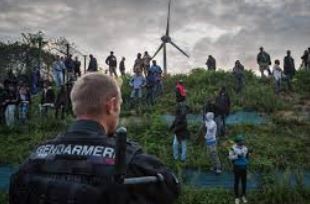
horrific and chaotic scenes at Calais and elsewhere across the continent
are also a product of the EU countries’ failure to respond to a disaster in
a humane and organised way. Instead of trying to provide a haven for people
fleeing catastrophe, the EU has becoming increasingly hostile. The amount of money being spent on
rescue attempts in
the Mediterranean has been cut.
“We used to think of migration as a human security
issue: protecting people and providing assistance . Now we clearly
perceive—or misperceive—migration as a national security issue. And the
risk of securitizing migration is that you risk legitimizing extraordinary
responses.”
See also -
|
No comments:
Post a Comment